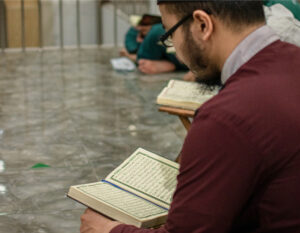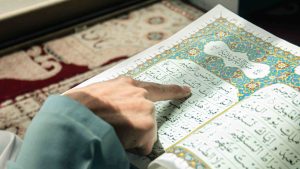

For fourteen centuries, the gold-standard of Qur’an education has been the neighborhood madrasah: rows of students on woven mats, the scent of musk hanging in the air, a teacher tapping the wooden pointer on a worn 13-line Qur’an. Today, however, a quiet revolution is unfolding inside laptop screens and smartphone cameras. Enrollment in online Qur’an academies has tripled since 2020, while brick-and-mortar institutions from Casablanca to Jakarta report record-low attendance. What is driving this seismic shift—and can pixels and Wi-Fi really rival the hallowed courtyard?
1. The Geography Gap Has Closed
Traditional madrasahs serve whoever lives within walking distance. Virtual classrooms serve whoever lives within internet range. A fisher’s daughter in the Maldives can now study with a Madinah-certified Ḥāfiẓ at 5 a.m. local time, something impossible even five years ago. Result: wait-lists for top online teachers exceed six months, while village madrasahs close rooms for lack of students.
2. Time Sovereignty
Madrasah timetables are fixed—miss the 4 p.m. slot and you’re marked absent. Online academies offer 24/7 booking grids that rotate with shift work, soccer practice, or night-shift nurses. Parents book lessons at 11:30 p.m. after toddlers are asleep and cancel in two clicks if overtime pops up. Convenience converts commitment into consistency, and consistency produces fluent reciters.
3. One-on-One vs. One-on-Twenty
A typical madrasah classroom hosts 15–25 students. In a 45-minute period, each child averages 90 seconds of active recitation. Online platforms guarantee a full 30-minute microphone block for every learner. The teacher hears every nasal error, every weak madd, and corrects before it fossilizes into habit. Data from Al-Huda Online shows students reach Tajweed proficiency 40% faster than matched peers in group settings.
4. Female Accessibility
Traditional settings often lack qualified women teachers, discouraging sisters who observe modesty considerations. Virtual academies maintain global rosters of female Ḥāfiẓāt, allowing girls to study face-to-face without leaving home. Since 2021, 68% of new enrollments in online Qur’an institutes are female—double the ratio of onsite institutions.
5. Parental Oversight, Real-Time Metrics
Madrasah progress reports arrive quarterly—if at all. Online dashboards update after every lesson: letters mastered, rules applied, verses memorized, even audio clips of the student’s voice. Mothers glance at phones during grocery runs and know instantly whether yesterday’s Ṣād needs more drill. Transparent data keeps parents engaged and children accountable.
6. Cost Efficiency Without Quality Loss
Running a physical school entails rent, utilities, janitorial staff. Online academities eliminate overhead, passing savings to families. The average global fee for one-on-one virtual Qur’an instruction ($49–79/month) undercuts group madrasah tuition in many Western cities, while the teacher still earns a higher hourly wage because platform commission is lower than facility costs.
7. Tech-Enhanced Pedagogy
Slow-motion playback, waveform visualization of nasal ghunnah, and instant whiteboard annotation surpass what a wooden pointer can illustrate. AI-powered pronunciation reports highlight recurring errors in color-coded heat maps, something even veteran madrasah instructors cannot produce manually.
8. Safety and Pandemic Resilience
COVID-19 shuttered thousands of madrasahs for months. Online classes doubled enrollment overnight, proving that Qur’anic education need never be interrupted by lockdowns, transportation strikes, or extreme weather.
The Human Element: Can Screens Replace Spiritual Ambiance?
Critics argue that online learning lacks the ṣūfī aroma of musk or the barakah of congregational recitation. Advocates counter that barakah resides in the Word itself, not the wallpaper. Many virtual teachers open each session with collective duʿā, encourage group competitions via breakout rooms, and host annual in-person graduation gatherings—blending digital convenience with traditional fellowship.
Conclusion: Complementary, Not Competitive
Traditional madrasahs will always anchor communities where reliable internet and qualified scholars exist locally. Yet for millions outside that radius—expatriates, rural villagers, special-needs learners, and working parents—virtual Qur’an academies have become the primary, sometimes only, avenue to divine speech. The courtyard is expanding; its walls are now made of light.